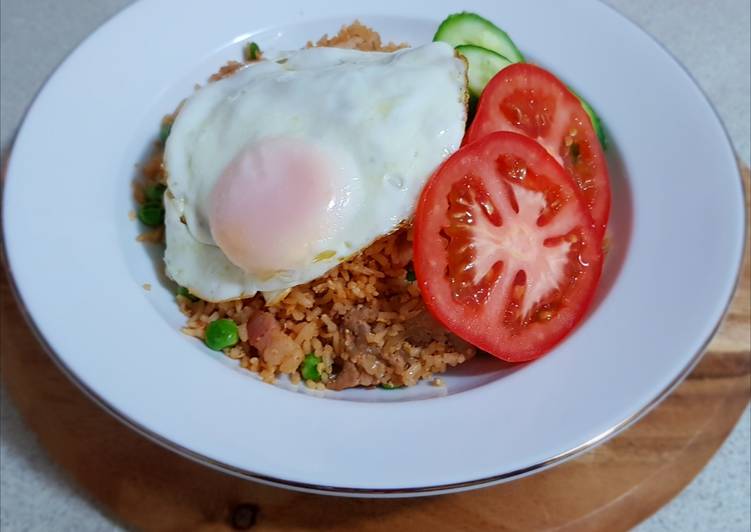
Nasi goreng (fried rice). Nasi Goreng is the popular Indonesian fried rice which is traditionally served with a fried egg. I love the unique dark brown, caramelised colour of the rice! It's a simple recipe, you won't need to hunt down any unusual ingredients, and it's one of my favourite Indonesian foods.
 We love the fact that it.
Nasi goreng (English pronunciation: /ˌnɑːsi ɡɒˈrɛŋ/), literally meaning "fried rice" in both the Indonesian and Malay languages, is an Indonesian rice dish with pieces of meat and vegetables added.
This fragrant rice dish with chicken, prawns and shredded omelette is the ultimate comfort food for spice lovers.
You can have Nasi goreng (fried rice) using 10 ingredients and 3 steps. Here is how you cook it.
We love the fact that it.
Nasi goreng (English pronunciation: /ˌnɑːsi ɡɒˈrɛŋ/), literally meaning "fried rice" in both the Indonesian and Malay languages, is an Indonesian rice dish with pieces of meat and vegetables added.
This fragrant rice dish with chicken, prawns and shredded omelette is the ultimate comfort food for spice lovers.
You can have Nasi goreng (fried rice) using 10 ingredients and 3 steps. Here is how you cook it.
Ingredients of Nasi goreng (fried rice)
- You need 2 tablespoons of oil.
- You need 100 gram of bacon or ham (optional).
- You need 100 gram of peas.
- It's 600 gram of refrigerated rice.
- You need 1-2 tablespoons of sweet soy sauce.
- You need of Spices (ground).
- Prepare 5 of shallots.
- It's 3 cloves of garlic.
- You need 3-5 of red chillies (optional).
- Prepare 1/2 teaspoon of dried shrimp paste.
Pour in the beaten egg and, as it begins to cook, use a spatula to bring large flakes of cooked egg into the middle of the. Nasi goreng, Indonesia's version of fried rice, gets a sweet-savory profile from kecap manis and a big hit of umami from shrimp paste. Nasi goreng is essentially Indonesia's take on fried rice. This dish can be enjoyed by itself or as the basis of a larger meal, for example with a rijsttafel.
Nasi goreng (fried rice) instructions
- Sauted ground spices in oil until fragrant and throughly cooked..
- Add bacon or ham, rice, peas and sweet soy sauce. Mix well until rice becomes warm..
- Serve fried rice with fried eggs, finely sliced cucumber and fried shallot..
It is very easy to make and won't Nasi Goreng is a staple in our home. My hubby's maternal side of the family are dutch.however they spent a good deal of time in Indonesia. Nasi Goreng can be served as a main dish, as a component of a Dutch/Indonesian 'rijstafel' or as a side dish. It is commonly eaten by Indonesians for breakfast, which you can do also if there is any left from the previous day (doubtful!). Preparation time does not include cooking and cooling the rice.
